How to Create a Calm Dog
Updated: Mar 2

Many people mistake their dogs' exhaustion for calmness. They're not the same. Most dog owners think they know what a calm dog looks like, but they usually picture a tired or inactive dog. Just because your dog is doing nothing doesn't mean they're calm. Real calmness is different, and when owners learn to recognize it, behavior problems often improve more quickly.
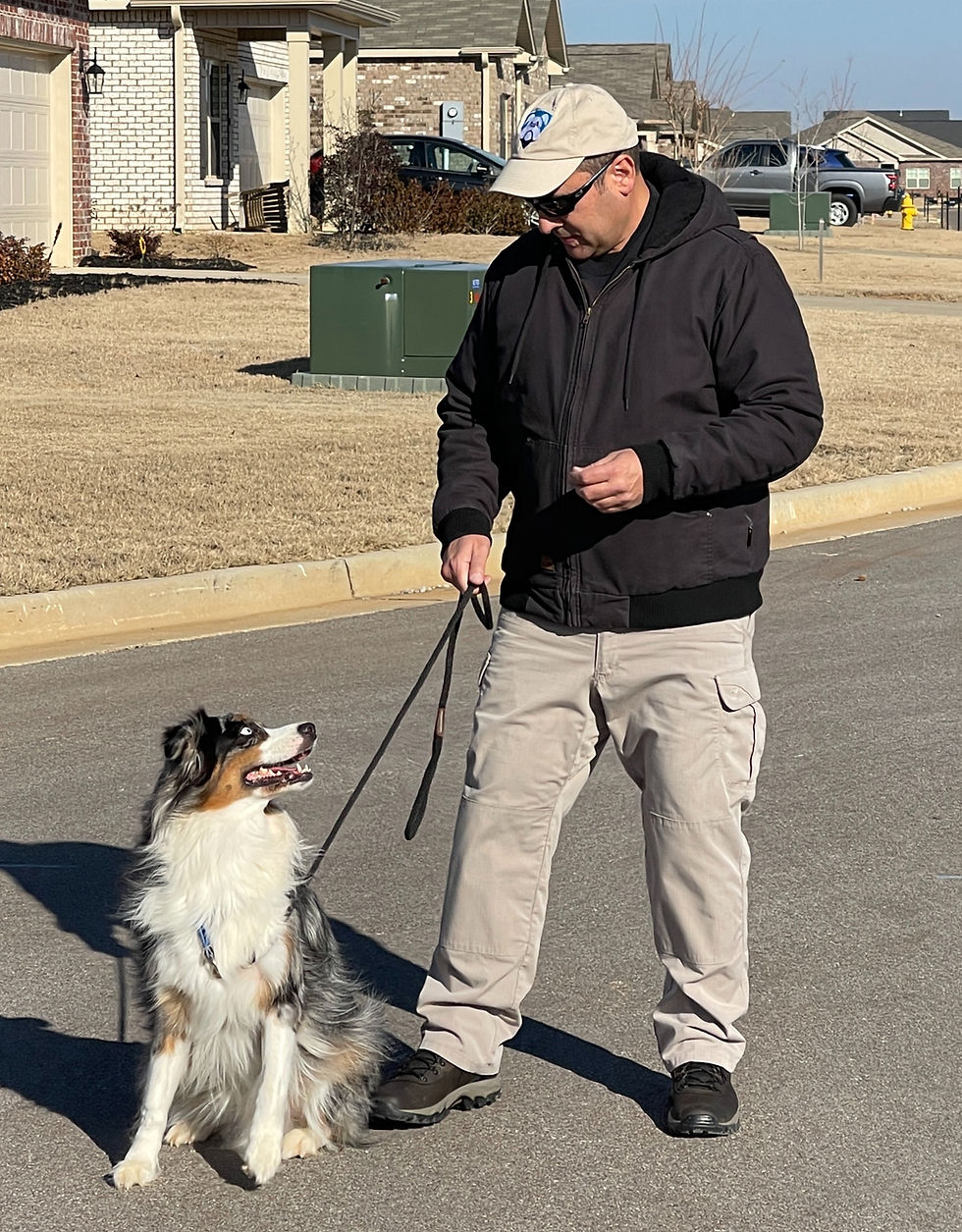
I have a very calm dog. She's been calm since I first got her. She's a therapy dog. She's a 6-year-old mini Australian Shepherd named Dixie. She is the calmest dog that I have ever met. She's a very zen dog.
Real calmness has to be taught to your dog. It's not inherent, it's not genetic. You have to teach the dog to be calm yourself. You have to teach the dog what calmness is and reward that behavior throughout its life, because dogs constantly want to move from calm to excitement. There are a lot of little things that can overstimulate a dog, which makes them less calm.
In the many years that I've been a dog trainer, I've never once been asked to come over and make my dog more hyper. Everybody wants their dog to be calmer because a calmer dog is more manageable. Their behavior is better; they're going to have fewer potty accidents, and they're gonna be less destructive. They're not going to bark as much. They're going to be easier to walk on a leash. They're going to be easier to take out in public, like Home Depot and Lowe's. A calm dog is always a more well-behaved dog, and this is what people call me for.
When I start a new client, I make it clear that most of the training is for the owners. It's not for the dogs. I'm coaching the owners on how to be calm themselves so their dog can be calm. Most owners accidentally reward excitement and overlook calm behavior. For example, if the dog is jumping up and they're pushing the dog down and saying “down, off, no, stop,” They're giving the dog attention, and it's going to do more of that behavior because it likes that game of jumping up on you, getting talked to, getting touched, and there it's being reinforced.
The first thing you want to do if your dog isn't calm is stop talking to them. The next thing, if they're overexcited, stop touching them until they are calm. You can touch them when they're calm and give them some relaxation pets on the side of their body. You can talk to them in a low tone, almost a whisper, saying “good, good girl, good boy. That's good.” Nice and calm, “good dog.” You're not trying to overstimulate them and overexcite them. That is the opposite of calm.
What calm actually looks like
Relaxed body posture
Soft eyes
Normal breathing. You can tell if a dog is anxious by its panting. That's not calmness.
Settling on their own without being cued. They lie down, put their heads on the ground, and calm themselves voluntarily. It's very important.
Quiet observation of the environment. They're aware of what's going on, but they're not reacting to it.
They are able to lie down without constant movement.
not reacting to every sound or motion. If your dog is lying down, they can react to things, and they can bark at it, and they can get up really quickly if something stimulates them. That's not calmness.
Calm does not mean exhausted, shut down, afraid, frozen, or forced into a down-stay. I see a lot of owners getting really firm and yelling at their dog, telling them to lie down and stay. That doesn't mean your dog is calm. That doesn't mean they're relaxed. We teach the dog to do it on their own.
What people mistake for calm
The Tired Dog: Calmness is not tired. Dog owners rely on long walks or heavy exercise just to get peace and quiet because the dog is exhausted. That's not a calm dog. That's a tired dog.
The distracted dog: Chewing on a bone or staring out the window nonstop is not always calm. That isn't what we're looking for here. Chewing on a bone, using a lickimat, or playing with a Kong helps keep them calm, but when you take it away, they should still be calm. That's what we're looking for.
The obedient dog: When a dog is in a sit or a down position, they can still be excited. Look at their tail, eyes, and body. Listen to their breathing. They can still hold these positions and be excited.
The overwhelmed dog. This is a dog that always seems quiet because it is unsure or stressed. I see this a lot with fearful, shy dogs. As young puppies, they hide behind their owners in social situations. That’s not calm. That may be non-reactive, but it doesn't mean they're calm. They're stressed out.
So know the difference between stress and calm. Remember that stillness is not always calmness.
Why calmness matters so much

Most good dog behaviors stem from calmness. Calm behavior leads to the dog being a better listener, less leash-pulling, less jumping, less barking, easier vet visits, easier grooming, and better house manners. Obedience training also works better when the dog is calm. A calm dog is more attentive and engaged. They’re more confident and less stressed.
My goal with training them and their dog is to ensure they can live together in a stress-free, harmonious, easy-to-manage environment. A dog that's not calm is not going to be easy to live with. That's why calmness is so important.
How owners accidentally prevent calm
Constantly talking to the dog. Most dog owners prevent calm with their dogs by constantly talking to them. I go to some people's homes and try to coach them on training their puppy, and they're constantly talking to the puppy and saying the puppy's name. That's a big problem, because that overstimulates the puppy. The dog's overexcitement, and then they want calmness.
Petting the dog when it’s excited. Touching your dog at the wrong time, when they are excited, will reinforce the excitement.
Greeting with too much energy. When you come home, if you talk to your dog in a high-pitched voice, it will take them out of calmness and bring them into excitement.
Encouraging hyper play all the time. I encourage play to be outside in the backyard or at daycare. In the house is calmness. It's a yoga class.
Constant stimulation. If you're constantly stimulating the dog with things we've already mentioned, such as talking to them, touching them, and playing with them, it’s unlikely to make them calm.
Never asking the dog to turn it off. Teaching the dog to turn it off, stop, and do nothing, while staying calm and relaxed, is the owner's responsibility. You have to teach your dog that.
How to teach calm at home
Notice when the dog settles on their own and reward that by saying, “good girl, good boy,” with quiet praise or gentle petting when they're calm.
Create calm routines. Here's an example: After walks, the first thing the dog should do is come in and settle on their bed. You can have them lie down and do nothing before meals. Have them sit or lie down and wait for their meals in a calm, relaxed state.
In the evening, when puppies get very hyper because everybody's home from school and work, the goal is to create calmness in the dog so that you can enjoy your evening, and the dog moves into sleep mode. Keeping a puppy awake till 10 or 11 o'clock at night is not a good idea. My dog starts getting ready to sleep around 7:00 PM; that's when she settles down.
Practice doing nothing. The dog can be near you while watching TV. There are no commands needed. Just have them settle with you and pet them. You don't have to be talking to them all the time. You can pet them a little bit, but let them be a dog. Let them sleep.
Reduce excitement before it starts. If you see excitement coming in your puppy, stop it right away. Get them to settle. Take them for a walk or out back to play. Then, bring them back inside the house. Have them settle. I like short five-minute dog walks out front because it resets the dog, then you can bring them back in, and they can settle a lot easier, especially if they've had a potty break.
Conclusion
If you want your dog to be calm, you also have to be calm. If you’re anxious, worried, fearful, doubtful, or excited. Your dog will not be calm. As dog owners, we have to set the example of what we want the dog to do.
Request a FREE Phone Consultation for dog training in Huntsville, AL.