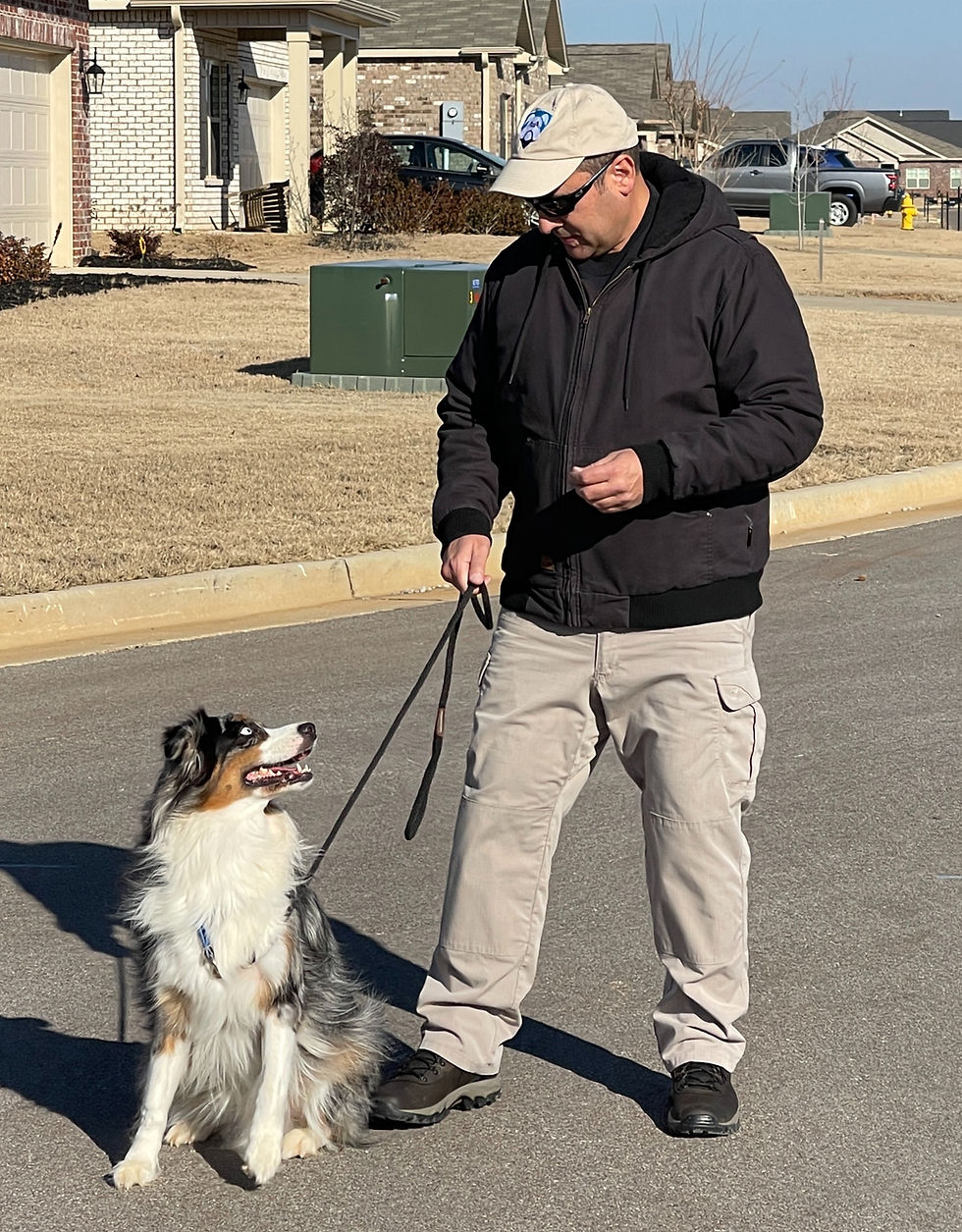
Puppy Expectations vs. Reality

Before bringing home a puppy, we all have this picture in our minds. We imagine cuddles on the couch, walks through the neighborhood, and a puppy that happily follows us around and quickly learns everything we teach. Then reality shows up. Your puppy is biting your hands, chewing on your shoes, peeing on the floor, barking at nothing, and somehow finding trouble every time you look away. If that sounds familiar, you're not alone.
Unrealistic Expectation #1: Puppies Naturally Know How to Behave
Many people believe puppies somehow understand the rules of the house, but they have to learn rules and boundaries from you. The reality is they don't know anything. They don't know where to potty. They don't know furniture is off limits. They don't know that shoes aren't chew toys. They don't know that jumping on guests isn't polite. Everything is brand new. Your puppy isn't being stubborn. They're simply learning.
Instead of asking, “Why is my puppy doing this?” Ask, “Have I actually taught my puppy what I want?” That's a much more productive question.
Unrealistic Expectation #2: Training Happens Quickly
Social media has created unrealistic expectations. You'll see videos of puppies sitting, staying, walking perfectly on a leash, and doing all sorts of fancy tricks. What you don't see are the weeks or months of practice behind those videos. Training isn't an event; it's a process. The process isn't always a straight line. Some days your puppy seems brilliant. The next day, it's like they've forgotten everything. That's completely normal.
I see this all the time in my clients' puppies. One day they're doing well; the next day they're not, and the owners get frustrated. But this is not the time to get frustrated. This is the time to stay calm and teach your puppy. Remember that learning happens through repetition. I have my clients do 25 repetitions per day of each movement and behavior we want the puppy to learn, such as sit, down, stay, and come. That's 175 repetitions that they have to do from one week to the next. They have to do these regularly so that the puppy can make progress through the obedience, behavior, leash training, and socialization training program.
Unrealistic Expectation #3: My Puppy Loves Everyone and Everything
People often expect their puppy to instantly love every person and every dog. Reality is much more complicated. Some puppies are naturally confident. Others are cautious. Some love meeting strangers. Others need time. That's okay. Your goal isn't to force your puppy into every situation. Your goal is helping them feel safe while gradually building confidence.
Confidence grows one positive experience at a time. This happens when you take your puppy on field trips. In our puppy training program, we go to places like Home Depot, Lowe's, Tractor Supply, Hobby Lobby, Bass Pro Shops, and many more. Every location is a different experience for the puppy, and the more field trips you take, the more confidence your puppy will build.
Unrealistic Expectation #4: My Puppy is Being Bad
This is one of the biggest misunderstandings. Owners often label perfectly normal puppy behavior as bad. These things include chewing, biting, digging, having potty accidents, having zoomies in the house, and exploring and sniffing everything outside. These aren't signs of a bad puppy. These are signs of a puppy being a puppy. That doesn't mean you ignore the behavior. It means you teach better alternatives while remembering your puppy isn't trying to make your life difficult. They're simply acting their age.
I see owners all the time with puppies that are 12, 14, 16 weeks old, and the puppy's not doing everything perfectly. They're not walking on the leash perfectly yet. They are still jumping on some people and having a few potty accidents, but it's a process. You can't get frustrated and upset at a puppy that young. You wouldn't expect a young child that's three or four months old to do everything perfectly.
Unrealistic Expectation #5: Once My Puppy Learns It, We’re Done
One of the biggest surprises is that learning never really ends. Just because your puppy sits perfectly in your kitchen doesn't mean they'll sit at the park. Dogs don't generalize as well as people do. Every new location is almost like starting over. You want to make sure you practice in different rooms, yards, parks, and environments. That's how behaviors become reliable.
One of the most common concerns I hear from the new puppy owners I work with is that their puppy's behavior is unreliable. One day, their puppy will lie down and come when they ask, but the next day it won't. You have to be consistent to build reliability. I recommend that my clients practice 90-second sessions five or six times a day rather than one long session. This helps the puppy retain it better and keeps them in a positive state of mind, so they enjoy the training, don't check out or get distracted, and can actually end the session while winning. You don't want the puppy to end the training session while losing and being frustrated because then they won't like training anymore.
The Reality That Matters Most
Here's the reality that nobody talks about enough. The puppy stage doesn't last forever. The sleepless nights, the potty accidents, the sharp puppy teeth, the endless energy- it all passes. One day you'll realize your puppy hasn't had an accident in months. They're walking nicely beside you. They're relaxing on their bed while you watch TV. They're becoming the dog you hoped for all along. It's just taking a little bit longer than you expected. Remember, it doesn't happen overnight. Every little lesson you teach today builds the dog you'll have for years to come.
Conclusion
If there's one thing I hope you take away from today's episode, it's this. Stop expecting perfection. Start expecting progress, even if it's just a little every day. Your puppy isn't trying to frustrate you. They're learning about the world one experience at a time. Celebrate the small victories. Praise your puppy as much as you can instead of correcting them all the time. Be patient. Stay consistent. And remember, every well-behaved adult dog was once the puppy who chewed shoes, had potty accidents, and kept their owner wondering what they had gotten themselves into.
Request a FREE Phone Consultation for dog training in Huntsville, AL.